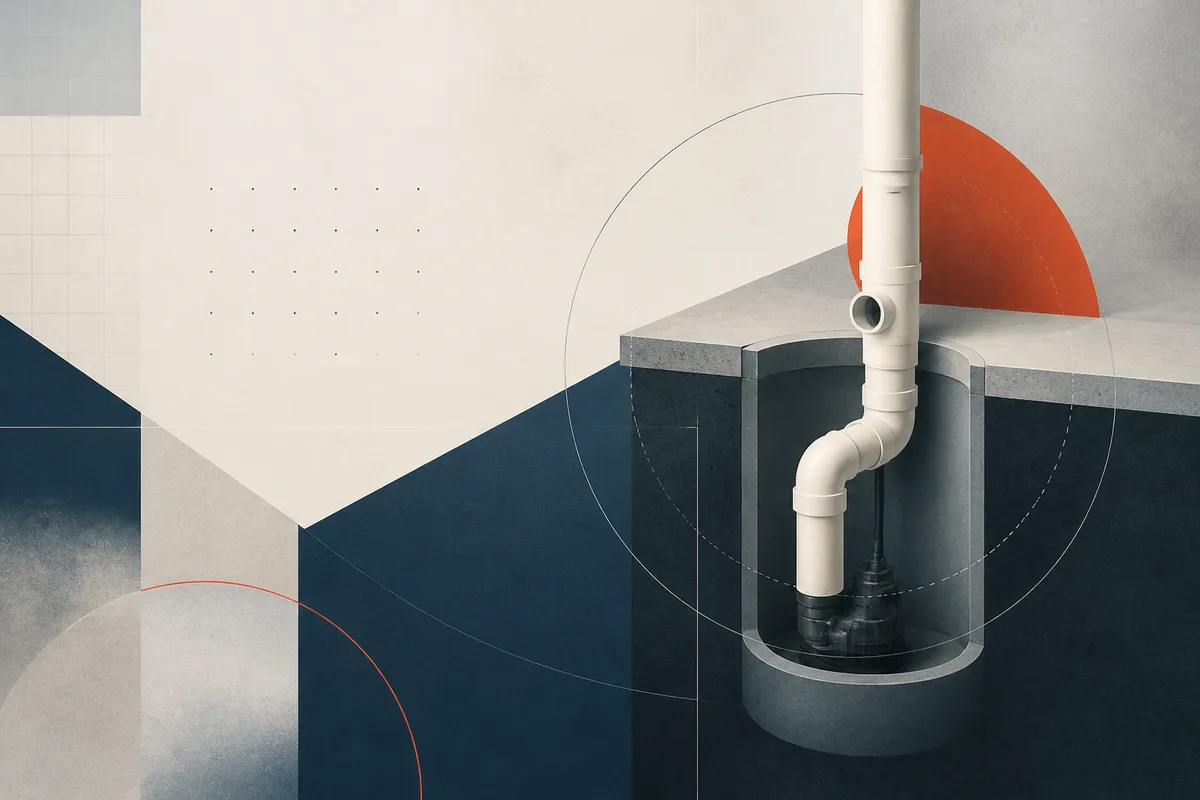
Why Your Radon System Fails at the Sump Pit
Most radon mitigation failures in the Denver area aren’t caused by undersized fans, but by the "short-circuiting" of the vacuum at the sump pit. When a thin plastic lid is held down by a few beads of hardware-store caulk, the system loses the ability to pull air from beneath the furthest corners of the slab. Instead of depressurizing the soil, the fan takes the path of least resistance, sucking air directly from the basement through gaps in the pit cover.
This article establishes the technical requirements for an effective sump seal and provides a playbook for homeowners and real estate professionals to evaluate existing systems. Whether you are addressing a failed inspection or optimizing a new installation, the focus must be on maintaining a gas-tight seal without sacrificing the ability to service the pump.
Why generic sump seals compromise safety
When a mitigation system is active, the sump pit becomes a primary suction point for the sub-slab environment. If the seal is not airtight, the physics of the system shift from soil depressurization to simple room-air ventilation. Systems that pull soil air from a sealed sump pit are very effective at lowering indoor radon levels.
- Air bypass occurs when the fan pulls indoor air through gaps in the cover, reducing the suction available to reach the perimeter of the foundation.
- Inconsistent vacuum pressure leads to radon "pockets" in areas of the basement far from the sump pit.
- If sump pumps are not covered and installed properly, they can contribute to moisture and mold problems.
- Fluctuating groundwater levels in the local basin can shift unanchored covers, breaking the seal over time.
The framework for professional sump pit sealing
Effective radon mitigation requires a system that handles both gas and water without failure. Following these steps ensures the sump pit contributes to, rather than detracts from, the system's performance.
1Establish a rigid foundation
The cover must be constructed of a durable, non-flexible material like heavy-duty polycarbonate or thick PVC. Flimsy covers may bow under the constant vacuum pressure of the radon fan, potentially cracking the sealant around the edges. A radon-resistant sump cover fits tightly over the basin and seals the perimeter.
2Utilize mechanical grommet seals
Passive sealing with silicone around pipes is a common failure point because pipes vibrate and expand. Use rubber grommet seals for the discharge pipe, electrical wires, and the radon suction pipe to create a flexible yet airtight interface. This allows for slight movement without breaking the gas-tight barrier.
3Incorporate a transparent viewport
A "blind" seal is a liability for any homeowner with a functioning sump pump. Some installers use plexiglass to allow for visibility, providing a clear viewport that allows for visual inspection of the water level and pump operation. This prevents the need to destroy the structural seal just to check if the pump is running.
4Verify the pressure field extension
Once the pit is sealed, the final step is to measure the sump pit vacuum pressure at the furthest point from the suction pit. This diagnostic step confirms that the seal is tight enough to force the fan to draw air from the soil rather than the room. If the pressure is insufficient, the seal or the fan capacity must be re-evaluated.
The physics of vacuum leaks in semi-arid climates
In the Denver area, the soil often contains high amounts of expansive clay minerals, as noted by the Colorado Water Knowledge geological data. These soils shrink and swell based on moisture content, which can create significant voids under a home's slab. If a sump pit is not sealed, the radon fan will naturally pull air through these voids from the pit rather than through the dense clay at the foundation's edges.
Furthermore, the local climate features significant temperature swings that cause building materials to expand and contract. A generic seal often fails because the sealant used lacks the elasticity to handle the thermal shift. Professional installations utilize specialized sealants that remain flexible, ensuring the vacuum remains intact year-round.
How Denver Radon Services helps
A repair or optimization project begins with a diagnostic of the existing pressure field. Technicians inspect the integrity of the sump basin, the condition of the pump, and the current seal's effectiveness before proposing a scope of work. A sound scope of work includes the removal of substandard lids, the installation of a load-bearing, gas-tight cover, and a radon testing protocol to verify the repair. For properties in the Lakewood service area and surrounding counties, ensuring the sump pit is properly integrated is a critical step in lowering high radon readings.
Frequently asked questions
Can I still use my sump pump if the pit is sealed for radon?
Yes, a professional seal is designed to be accessible for maintenance. The discharge pipe and power cords are routed through airtight grommets, and the pump functions exactly as it did before. The only difference is that the pit is now isolated from the basement air to prevent radon gas from entering the living space.
How do I know if my sump pit seal is leaking?
A simple way to check is to look at the U-tube manometer on your radon system pipe. If the fluid levels are even, the fan is off or there is a massive leak. Your sump pump lid should be 100% sealed to prevent house problems, odors, moisture, or mold.
What is the difference between a sump cover and a radon-ready cover?
A standard sump cover is designed solely to keep debris out and prevent accidents. A radon-ready cover is engineered to withstand constant negative pressure and is equipped with airtight seals for all penetrations. In areas where soil gas is prevalent, a standard cover is rarely sufficient to maintain a vacuum.
Will sealing the sump pit cause the pump to overheat?
No, the pump is cooled by the water it moves, not by the air in the pit. Because the pit is under vacuum, there is still air movement, but it is controlled and directed through the mitigation system rather than into the home living space.
Should I use silicone or a gasket to seal the lid?
Gaskets are often preferred for the main lid to allow for easier removal during pump maintenance. However, specialized removable sealants are also common. The goal is to ensure the material used can be cut and replaced without damaging the cover or the basin rim when the pump requires service.
Will sealing my sump pit fix my radon problem?
If you test at 4 pCi/L or higher, sealing the pit alone isn't a fix; the EPA doesn't recommend sealing by itself because it hasn't been shown to lower levels significantly on its own. Sealing is a component of a larger active mitigation system that uses a fan to create a vacuum.
What happens when you get in touch: you describe the situation, we ask the few questions that actually change the answer, and you get a clear scope and next step — no obligation.