How much does radon mitigation cost in Denver?
It depends on the foundation, not on the reading. A single-slab basement with a clean pipe route is the cheapest case; a crawlspace needing a membrane, a house with several slabs at different levels, or a run that has to go through finished space all cost more. A house with a builder-installed passive stub is cheapest of all, because most of the pipe is already there. We quote after looking, and you approve the number before anything starts.
What is a dangerous radon level?
The EPA sets its action level at 4.0 pCi/L and recommends considering a fix between 2.0 and 4.0. There is no threshold below which radon is known to be harmless — the risk falls as the number falls, it does not switch off. Most systems around here aim to leave a house comfortably under 2.
Is radon really a problem in Colorado?
Every county we work in is mapped by the EPA as Zone 1, its highest-risk band, and Colorado's health department has long put roughly half the homes in the state above the action level. That is a statement about the state, though, not about your house — the only thing that settles your address is a test at your address.
How long does a radon system take to install?
Most single-family systems go in within a day. Crawlspaces, multiple slabs, or a pipe route through finished space can run to two. The test before it is a fixed 48 hours and cannot be shortened.
Do I need to test if my neighbour tested low?
Yes. Two identical houses side by side read differently all the time — it depends on your foundation, how much of it contacts soil, how tightly the house is sealed and how you run it. Radon is measured per house, never per street.
We are selling and the inspection found radon. What now?
You are on a clock, and that changes the order of operations. Tell us your objection date first and we will say honestly whether we can hit it. Who pays is negotiated between the parties; what we can do is get you a real number fast enough to be useful in that negotiation.
Will a mitigation system make my house cold or noisy?
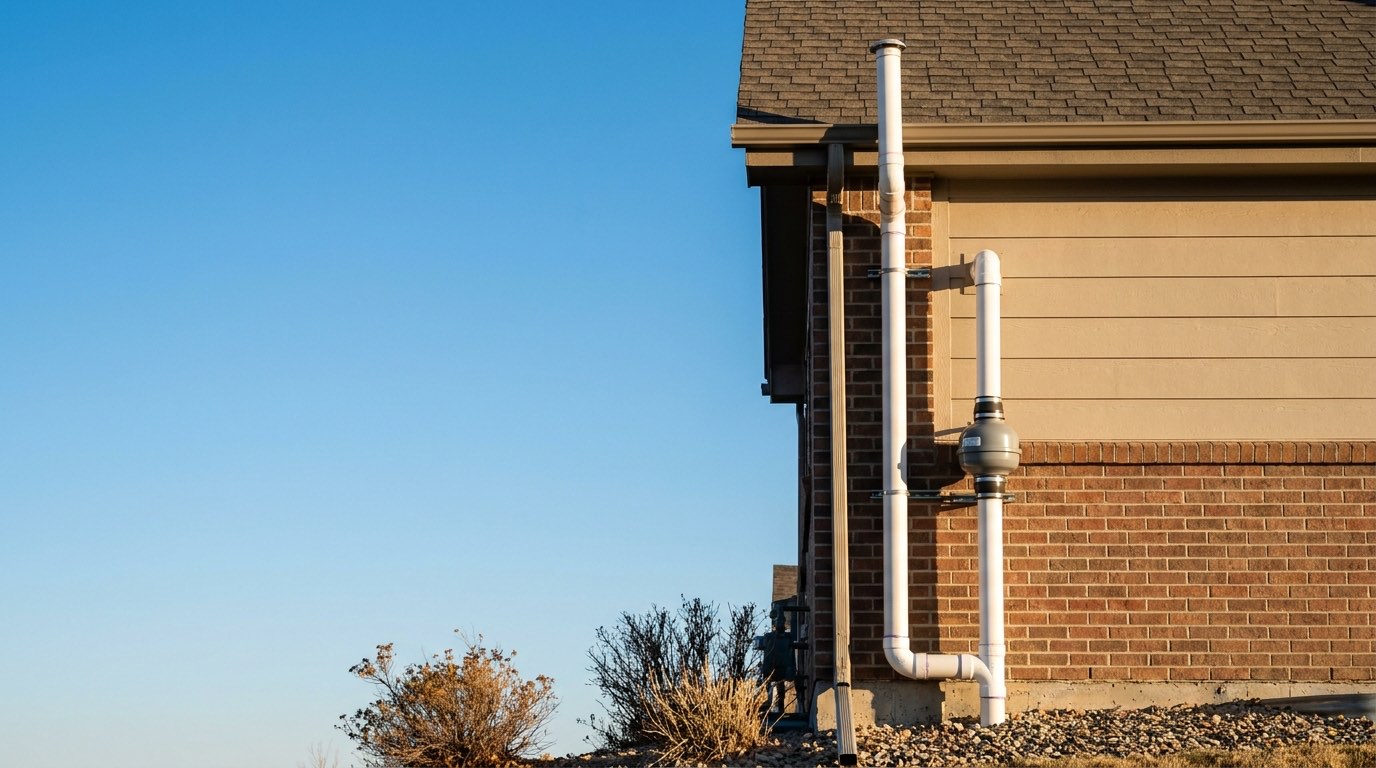
The fan sits outside the living space and reads as a low hum at most. It does draw a small continuous electrical load and it will pull some heated air through any gap that was not sealed — which is exactly why sealing the slab is part of the install rather than an upsell.
How often should I retest?
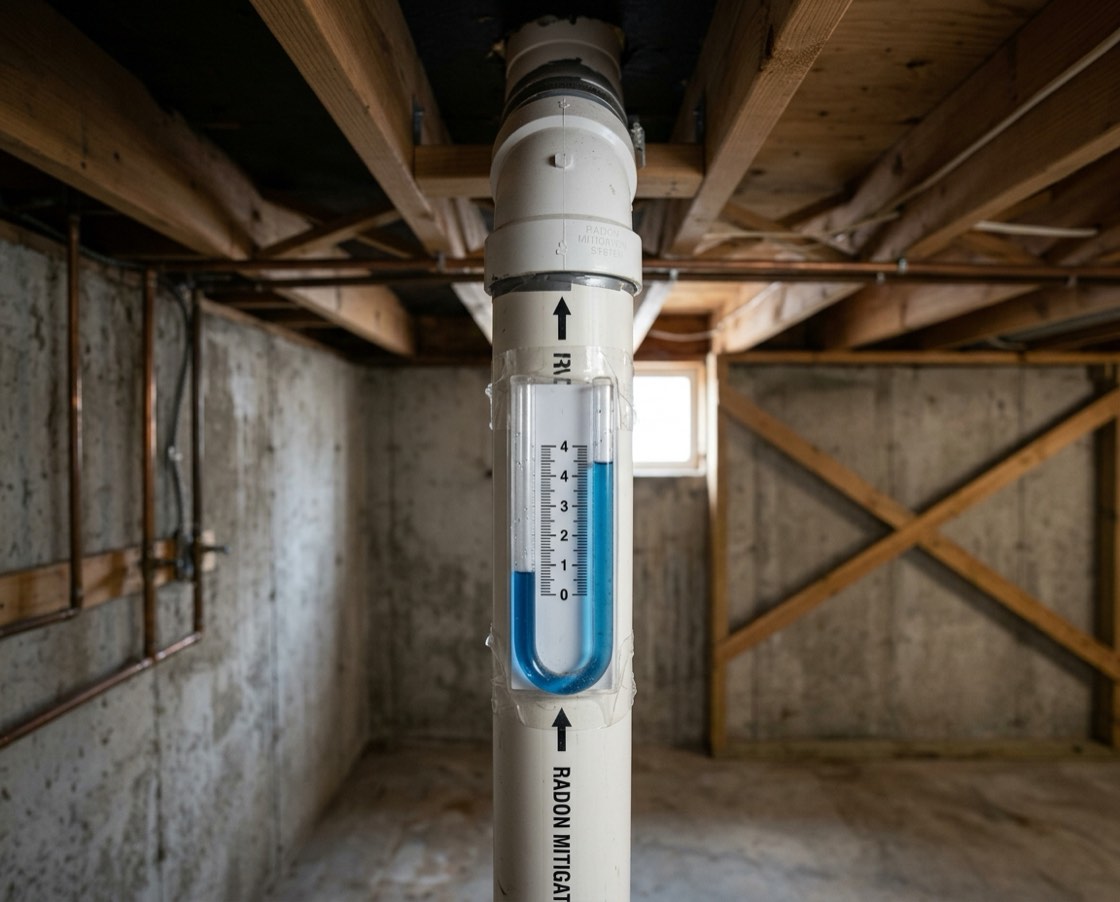
Every couple of years, and additionally after anything that changes the house: foundation work, a new furnace or water heater, finishing a basement, new windows, an addition. Also any time the gauge on the pipe stops showing a difference between its two columns — that means the fan has stopped.