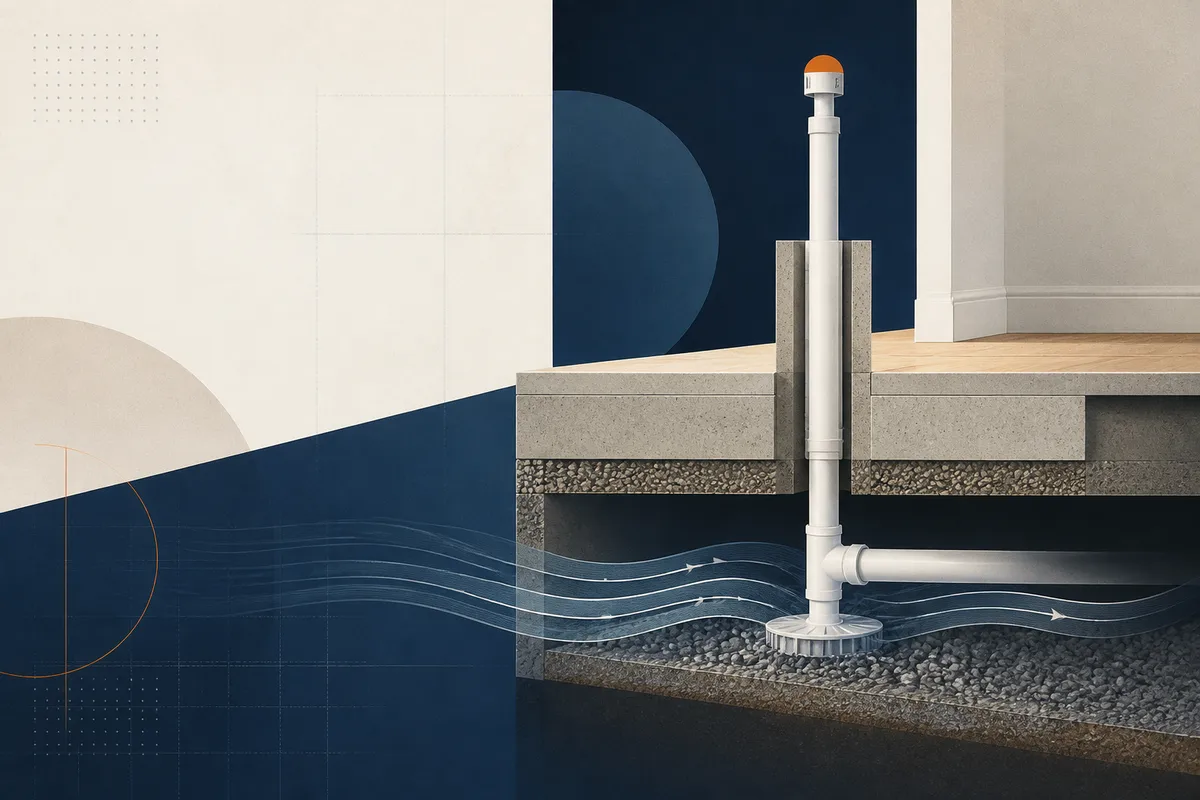
Understanding Sub-Slab Depressurization Components and Mechanics
Most property owners view a radon mitigation system as just a plastic pipe and a fan, but the system is actually a pressure management tool. If the vacuum field does not extend to the furthest corners of the foundation, the system fails to prevent gas intrusion regardless of how powerful the fan feels. In the Denver area, where tight clay soils often resist airflow, the configuration of the suction pit and the sealing of the slab are just as critical as the mechanical components themselves.
This guide breaks down the individual radon mitigation system components to help buyers and real estate professionals understand the mechanical requirements of a sub-slab depressurization system. Knowing these parts allows for better maintenance oversight and ensures the system remains compliant with safety standards.
Why Component Selection Dictates System Longevity
When a mitigation system underperforms, it is rarely due to a total mechanical failure; it is usually due to a mismatch between the home's footprint and the system's design. Small errors in component placement can lead to localized "dead zones" where radon levels remain high.
- Incorrect fan sizing can lead to premature motor burnout if the fan is forced to work against too much resistance from compacted soil.
- Inadequate sealing of sump pits or floor cracks allows the system to pull conditioned air from inside the home rather than gas from under the slab.
- Improperly pitched discharge piping allows condensation to pool in the fan housing, which typically causes the unit to fail during cold weather cycles.
- Poorly located exhaust vents can create "re-entrainment," where high concentrations of radon are pulled back into the home via nearby windows or HVAC intakes.
The Standard Anatomy of Sub-Slab Depressurization
1The Suction Pit and Extraction Point
The process begins with a hole drilled through the concrete slab, where a small amount of soil is removed to create a "suction pit." This cavity increases the surface area of the vacuum, allowing the system to pull gas from a wider radius. A PVC pipe is then inserted into this hole and sealed airtight with specialized urethane or silicone sealants to ensure the vacuum remains focused beneath the slab.
2High-Efficiency Inline Radon Fan
The fan is the heart of the radon mitigation systems and is usually installed in an attic, garage, or on the exterior of the home. According to the University of Nevada, Reno, these fans must be located outside the living envelope so that any potential leaks in the discharge piping remain under positive pressure outside the home. The fan runs 24/7 and is selected based on whether the soil is porous (high airflow) or tight (high static pressure).
3PVC Piping and Vent Stack
Standard schedule 40 PVC is used to transport the gas from the suction point to the exhaust. The pipe must be pitched back toward the suction pit to allow moisture—which naturally condenses in the pipe—to drain away without hitting the fan. The discharge point must terminate at least 10 feet above ground level and above the roofline to ensure gas dissipates safely into the atmosphere.
4System Monitor: The U-Tube Manometer
Every system includes a U-tube manometer, a clear gauge filled with colored liquid installed on the suction pipe. It does not measure radon levels; instead, it measures the pressure difference between the inside of the pipe and the room. If the liquid levels are offset, the fan is creating a vacuum; if they are level, the system is not functioning and requires immediate attention.
Interpreting the U-Tube Manometer Reading
The measurement of how hard the fan is pulling against the soil, displayed by the height difference of the liquid in the U-tube.
The manometer is the only way a homeowner can verify the system is working without a lab test. A standard reading often falls between 0.5 and 2.5 inches, depending on the fan model and soil density. If the liquid in both sides of the tube is equal at the "0" mark, the fan has lost power or failed. It is important to note that a higher reading is not always better; a very high reading may indicate a blockage or extremely tight soil that is restricting airflow.
Evaluating a Professional Scope of Work
A professional mitigation project in the Denver region involves a thorough assessment of the basement or crawl space to identify all potential gas entry points. A standard scope of work should include the installation of a dedicated circuit or a nearby electrical connection for the fan, the sealing of all visible slab cracks, and a post-mitigation test to verify the system has reached the desired levels. For those in Lakewood Service Area and surrounding neighborhoods, a sound installation will also account for the aesthetic impact on the home, utilizing downspouts or color-matched materials where appropriate. You can request a detailed assessment through the Denver Radon Services request page.
Frequently asked questions
Where should the radon fan be located?
According to EPA standards and IAC2 protocols, the fan must be located in an unconditioned space, such as an attic, a garage, or on the exterior of the house. It should never be placed in a basement or a crawl space. This ensures that if the pipe develops a leak above the fan, the pressurized gas is released outside rather than inside the living area.
How do I know if the radon fan has failed?
The easiest way to check is by looking at the U-tube manometer located on the PVC pipe in your basement or utility room. If the colored liquid is level on both sides, the fan is not creating a vacuum and may be broken or disconnected from power. You may also notice an absence of the slight vibration or humming sound normally produced by the motor.
Does the system need to run all the time?
Yes, a radon mitigation system must run 24 hours a day, 365 days a year to be effective. Radon gas is constantly seeping from the soil into the home; if the fan is turned off, the vacuum is lost, and gas levels can return to their original concentrations within hours. The fans are designed for continuous operation and have relatively low power consumption.
Why is the pipe vented above the roof?
Venting above the roofline is a safety requirement to ensure that the concentrated radon gas is released into the air where it can safely dissipate. If the pipe were to exhaust at ground level, the gas could easily drift back into the house through basement windows, doors, or even the HVAC system's fresh air intake.
Can a radon system help with basement moisture?
While not their primary purpose, sub-slab depressurization systems often have the side effect of reducing basement moisture. By pulling air and soil gases from beneath the slab, the system also draws out water vapor that would otherwise migrate through the concrete. This can sometimes lead to a slightly drier feel in the lower levels of a Denver home.
What should I do if my system is making a loud noise?
Loud vibrating or whistling noises usually indicate a problem with the fan bearings or a leak in the seals near the suction point. In some cases, it may be caused by condensation buildup if the piping was not installed with the correct pitch. You should contact a technician at (720) 677-9523 to inspect the system and determine if a component replacement is necessary.
What happens when you get in touch: you describe the situation, we ask the few questions that actually change the answer, and you get a clear scope and next step — no obligation.