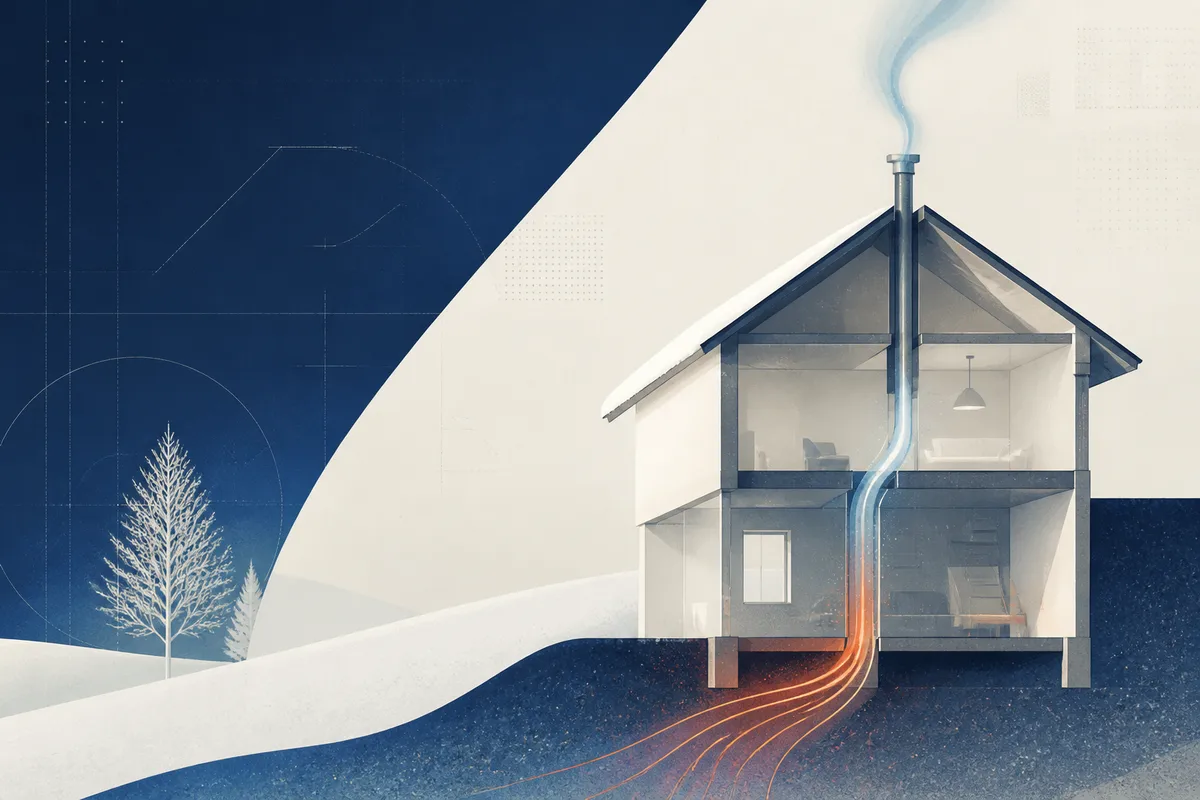
The Physics of Winter Radon: Understanding the Stack Effect
Most Denver homeowners assume their radon levels stay consistent year-round. This is a misconception that ignores the physics of thermodynamics and pressure. In reality, the same mechanism that keeps your home warm in January is likely increasing your exposure to radioactive soil gas.
Understanding the mechanics of the radon stack effect is critical for anyone managing property in the Mountain West. This guide explains how thermal buoyancy works, why winter weather creates a "capping effect" on the soil, and how professional mitigation adapts to these seasonal pressure shifts.
Why Seasonal Radon Spikes Are Often Misunderstood
Many residents believe that closing windows in the winter is the primary cause of rising radon levels. While reduced ventilation is a factor, the actual driver is a change in the building's pressure relative to the soil.
- Warmer air inside the home is less dense than the cold outdoor air, causing it to rise toward the attic and upper floors.
- As this warm air escapes through small gaps in the building envelope, it creates a vacuum—or negative pressure—in the lower levels.
- The foundation effectively acts as a giant straw, sucking in air and gases from the soil to equalize that pressure.
- Heavy snow or ice on the ground seals the soil surface, preventing radon from venting naturally into the atmosphere and concentrating it beneath the slab.
The Playbook for Managing Winter Radon Risk
Mitigating radon during peak winter months requires more than just installing a fan; it requires managing the home's air exchange and pressure dynamics.
1Perform a Winter Baseline Test
Because radon levels fluctuate significantly between seasons, a summer test may provide a false sense of security. Using a continuous monitor during a cold snap captures the "worst-case scenario" when the stack effect is at its peak. This data determines if a mitigation system needs higher suction capacity to overcome winter pressure differentials.
2Account for Furnace Cycling Radon
When a furnace or fireplace engages, it consumes indoor air for combustion and exhausts it through a flue. This mechanical exhaustion increases the negative pressure in the basement or crawl space. A technical assessment should look at how combustion appliances contribute to the furnace cycling radon effect, ensuring the home isn't working against itself.
3Seal the Foundation Envelope
The stack effect is most potent when there are clear pathways between the soil and the living space. Sealing sump pits, expansion joints, and floor cracks reduces the volume of air the house can pull from the ground. However, sealing alone is rarely enough; it must be paired with active depressurization to be effective.
4Optimize Sub-Slab Depressurization
The goal of a professional system is to ensure the pressure beneath the slab is always lower than the pressure inside the house. In the winter, the system must work harder to maintain this pressure gap. High-quality systems are designed to combat the radon stack effect by pulling air from the entire footprint of the foundation before it can enter the structure.
The Mechanics of Thermal Buoyancy
The physics of the stack effect is rooted in the "stack pressure" equation, which measures the difference between indoor and outdoor air density. In the Denver metro area, where outdoor temperatures can drop 40 degrees in a few hours, the pressure shift is immediate. As the heated air rises, it creates a "neutral pressure plane." Above this line, air is pushing out of the house; below this line, air—and soil gases like radon—is being pulled in.
The measurement of the pressure differential between the bottom and top of a building, which increases proportionally with the height of the building and the temperature difference.
How Denver Radon Services Helps
Addressing radon in the Colorado climate requires a localized understanding of soil composition and construction styles. A standard project begins with Radon Testing using calibrated monitors to establish a baseline. From there, a technician typically evaluates the foundation type—whether it's a slab-on-grade in a Lakewood service area home or a deep basement in an older Denver neighborhood. The scope of work usually involves installing a dedicated suction point and a specialized fan to vent gas safely above the roofline. Residents seeking immediate assistance or a technical walkthrough of their home’s specific risk factors can contact a specialist at +17206779523 or request a consultation at https://denverradonservices.com/.
Frequently asked questions
Can I just open a window to fix the stack effect?
Opening a window might dilute radon levels temporarily, but it can actually worsen the stack effect by creating more pathways for air to move. If you open an upstairs window, you might increase the "upward" flow of air, which pulls even more radon from the basement. It is an inefficient and unreliable way to manage long-term risk.
Why are radon levels higher at night during the winter?
Radon levels are typically highest at night and in the early morning because the temperature difference between the indoors and outdoors is at its widest. This maximizes thermal buoyancy. Additionally, as the ground cools and freezes at night, the "capping effect" becomes more pronounced, forcing more gas into the home.
Does a new, energy-efficient home have less of a stack effect?
Actually, modern, "tight" homes can sometimes have higher radon risks. While they have fewer leaks in the upper floors to let air out, they also lack "makeup air." When a bathroom fan or kitchen hood runs, it creates intense negative pressure that the house tries to equalize by pulling air from the soil.
Does snow on the roof impact radon levels?
Snow on the roof acts as an extra layer of insulation, but snow on the ground around the foundation is the bigger concern. It creates a physical barrier that prevents radon from diffusing through the yard. This forces the gas to move laterally until it finds the porous soil beneath your foundation.
Should I retest my home if I tested it during the summer?
If your summer test results were near the EPA action level, it is highly recommended to retest during the winter. Because the stack effect can double or even triple radon concentrations in some Colorado homes, a safe summer reading does not guarantee a safe winter environment. Professional long-term monitors provide the most accurate picture of these fluctuations.
What happens when you get in touch: you describe the situation, we ask the few questions that actually change the answer, and you get a clear scope and next step — no obligation.