The Myth of the Airtight Slab: Why Sealing Basement Cracks Rarely Stops Radon
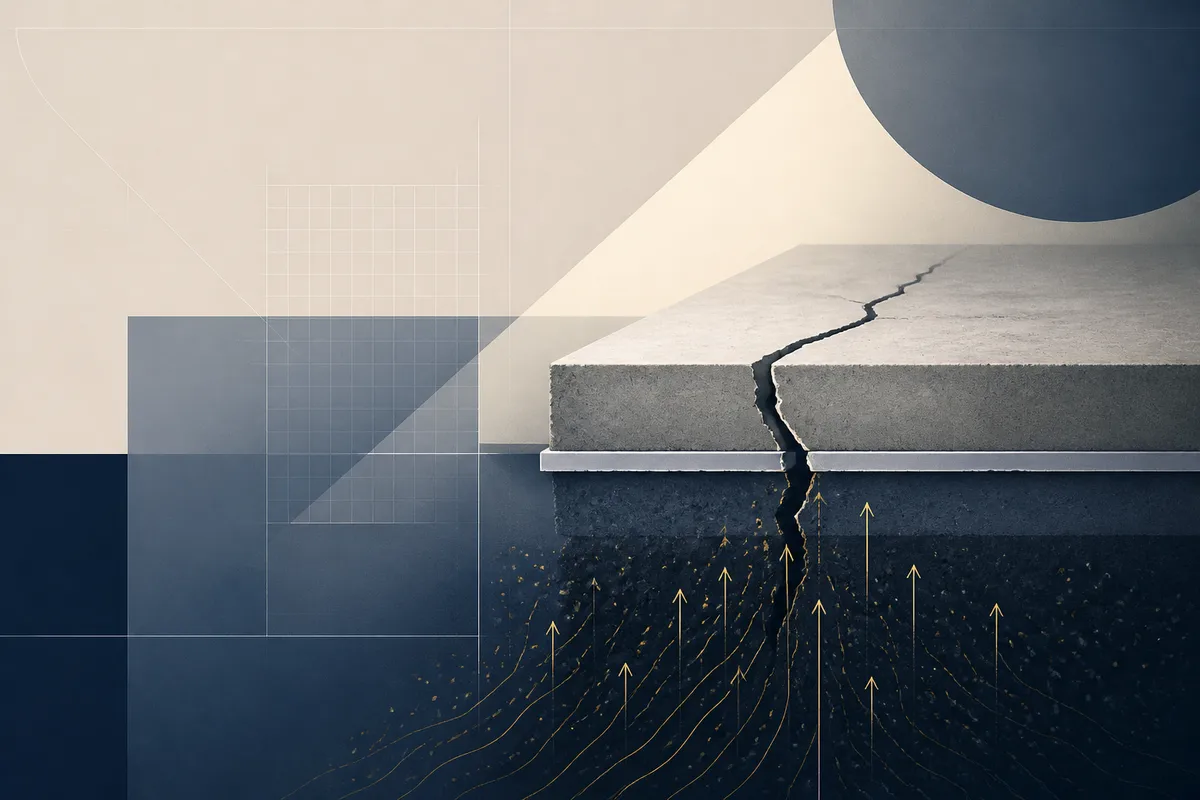
Homeowners often view caulk as the primary weapon against soil gas intrusion, assuming that plugging visible gaps will drop radon levels to near zero. In reality, sealing cracks alone has not been shown to lower radon levels significantly because gas can enter through even the smallest openings and joints (https://sosradon.org/Mitigation-basics). While sealing is a critical step in preparing a home for mitigation, relying on it as a total solution ignores the physics of soil gas permeability and pressure differentials.
This guide breaks down the mechanics of gas entry and why mechanical intervention is required for high-radon environments. Whether you are navigating a real estate transaction in the area or managing a long-term residence, understanding the limits of topical sealants is the first step toward a safe indoor environment.
Why Passive Sealing Fails as a Primary Strategy
Sealing visible cracks is often a game of "whack-a-mole" because the most significant entry points are usually hidden from view. Even a perfectly sealed floor cannot overcome the fundamental forces driving gas into a structure.
- Radon enters through cold joints, the gap where the foundation wall meets the floor slab (https://eliteinspections.com/does-sealing-the-basement-reduce-radon/).
- Concrete slabs are porous by nature, allowing gas to diffuse through the material regardless of surface integrity.
- Interior heating during cold winter months creates a "chimney effect" that increases the suction of soil gas into the living space (https://everdrytoledo.com/can-foundation-cracks-increase-radon-in-basements/).
- Hidden bypasses, such as plumbing penetrations behind drywall or under bathtubs, remain open even if the main floor is treated.
The Hierarchy of Radon Reduction
Effective mitigation follows a specific sequence of operations that moves from surface preparation to active pressure management.
1Perform Professional Diagnostic Testing
Before attempting any physical changes, establish a baseline using radon testing protocols that utilize continuous monitors. Short-term DIY kits can provide a snapshot, but professional equipment accounts for diurnal fluctuations and environmental variables.
2Map the Foundation Footprint
Identify all potential pathways, including sump pits, expansion joints, and crawl spaces. In many homes, a crawlspace radon membrane or sealing of the earth is used to isolate the building envelope from the soil.
3Apply Specialized Sealants
Polyurethane sealants are often preferred for foundation work because they are designed to bridge gaps while remaining flexible enough to maintain a seal during seasonal temperature shifts. Selecting a sealant that maintains its bond during slab movement is essential for long-term durability.
4Establish Sub-Slab Depressurization
Once the slab is prepared, a mechanical system is installed to create a permanent low-pressure zone beneath the house. By venting the air from under the slab to the outside, the system ensures that the path of least resistance for the gas is through the vent pipe rather than through the floor (https://sosradon.org/Mitigation-basics).
The Reality of Soil Gas Permeability
The effectiveness of any sealant is limited by the permeability of the substrate. Soil gas permeability refers to how easily gas moves through a medium. When a house sits on highly permeable soil, the volume of gas available to enter the home is much higher.
Even if a high-quality sealant is used on every visible crack, the pressure difference between the soil and the house remains. As long as the house is under lower pressure than the ground—common in Lakewood and surrounding areas due to wind and HVAC usage—radon will be "pulled" in. Mechanical systems reverse this dynamic, making the pressure under the slab lower than the pressure inside the home.
How Denver Radon Services helps
A professional mitigation scope of work involves a thorough inspection of the building's pressure boundaries to identify primary entry points for soil gas. For those in the Denver metro area, this typically includes an evaluation to determine the most efficient location for mechanical ventilation components. Property owners should look for a comprehensive approach that includes a post-mitigation test to verify that the reduction strategy has successfully reached the desired threshold.
Frequently asked questions
Can I lower radon levels just by painting my basement floor?
Standard concrete paint or "waterproofing" coatings are not thick enough to act as a radon barrier. While they might slightly reduce diffusion, they cannot bridge cracks that form as the house settles, nor can they seal the critical floor-to-wall joints where most gas enters.
How long does polyurethane sealant last in a foundation?
The lifespan of polyurethane sealant depends on the stability of the foundation and environmental conditions. While these sealants are designed for durability and flexibility, any significant house settling or hydrostatic pressure can eventually compromise the seal, requiring a re-evaluation of the home's mitigation system.
Does sealing a sump pit make a difference?
Yes, an open sump pit is often a large contributor to radon levels because it provides a direct opening to the soil below. A proper mitigation strategy includes a gasketed, airtight lid for the sump crock (https://americanradonmitigation.com/why-is-sealing-important-for-radon-mitigation/).
Should I seal cracks before or after a radon test?
You should test first to understand the severity of the problem. If levels are marginally above the action limit, sealing might help bring them down slightly (https://www.radonseal.com/radon_mitigation.htm?srsltid=AYCX9vIIhRzpFd-H2SlZiEoYarlh3-iddg7FUmtRCskJykkhdPlW5juX), but if levels are significantly high, you will need a mechanical system regardless of how much sealant you apply.
Is it necessary to seal the crawl space if it has a concrete floor?
Yes, because crawl space slabs are often thinner and more prone to cracking than main basement slabs. Sealing these gaps is important to increase the efficiency of a radon mitigation system (https://www.facebook.com/groups/connectionscheyenne/posts/1492025295000194/).
What happens when you get in touch: you describe the situation, we ask the few questions that actually change the answer, and you get a clear scope and next step — no obligation.