Stopping Soil Gas at the Source: The Mechanics of Crawl Space Radon Mitigation
Radon levels in Denver frequently exceed recommended limits because the local geology provides a steady supply of uranium decay products directly into home foundations. While homes built on concrete slabs allow for sub-slab depressurization, older homes or split-levels with dirt crawl spaces present a unique challenge: there is no natural pressure barrier between the soil and the indoor air. Without a physical seal, a standard suction fan simply pulls conditioned air from the house into the crawl space, wasting energy without significantly lowering radon concentrations.
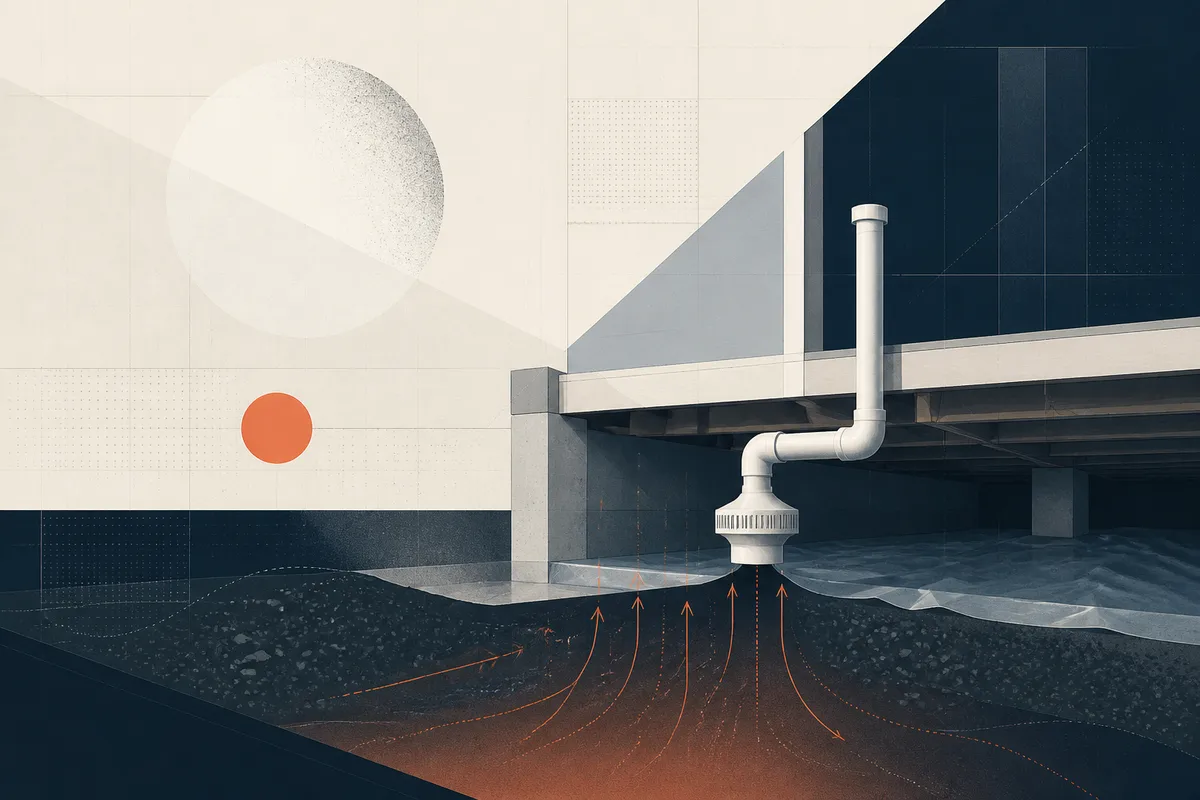
Effective crawl space radon mitigation relies on a technique known as sub-membrane depressurization. By installing a heavy-duty vapor barrier and creating a vacuum beneath it, the system intercepts soil gas and vents it safely above the roofline. This article outlines the technical requirements for sealing dirt crawl spaces and the specific steps necessary to ensure the system remains functional for the life of the home.
Why Standard Ventilation Fails in Dirt Crawl Spaces
Many homeowners attempt to solve radon issues by increasing crawl space ventilation or adding passive vents, but these methods are rarely sufficient for Colorado’s high-radon environment. Relying on passive airflow is unpredictable and often fails for the following reasons:
- Passive vents are subject to the "stack effect," where warm air rising through the house pulls more radon-laden air up from the ground.
- Unsealed soil provides an infinite source of gas, meaning any air removed by a fan is immediately replaced by more radon from the earth.
- Open vents in the Denver metro area can lead to frozen pipes during winter months, creating secondary structural risks.
- Without a sealed vapor barrier, moisture levels remain high, which can degrade floor joists and promote mold growth alongside radon accumulation.
The Professional Sub-Membrane Depressurization Framework
A successful installation requires a shift from "covering the dirt" to "sealing the environment." The goal is to turn the entire crawl space floor into a functional airtight plenum.
1Clear the footprint and prepare the soil
The ground must be leveled and cleared of sharp rocks, debris, or construction waste that could puncture the membrane. In some cases, a layer of specialized drainage matting or perforated piping is laid down first to ensure that vacuum pressure can reach the furthest corners of the foundation.
2Install a high-durability polyethylene membrane
Standard 6-mil plastic is insufficient for radon mitigation as it tears easily during routine maintenance or storage. Professionals typically use a multi-ply polyethylene membrane that is at least 12-mil to 20-mil thick. The material must be rolled out with significant overlaps, usually 12 inches or more, which are then fused with specialized seam tape.
3Execute the perimeter and pillar seal
The membrane is not just laid on the ground; it is mechanically fastened and sealed to the foundation walls. The edge of the plastic is tucked and adhered using a permanent polyurethane sealant or specialized masonry tape. Every support pier, plumbing stack, and electrical penetration must be individually wrapped and sealed to prevent air leaks that would break the vacuum.
4Integrate the soil gas collection system
A suction point is established by placing a PVC intake pipe through the membrane and into the soil or drainage matting below. A specialized "sump-style" flange or bulkhead fitting ensures that the connection point remains airtight. This pipe connects to a dedicated radon fan, which runs continuously to maintain a negative pressure field under the entire liner.
The Physics of Sub-Membrane Suction
The effectiveness of this system is measured by pressure field extension. When the fan is activated, it creates a "vacuum sandwich" between the earth and the plastic liner. Because the polyethylene membrane is non-porous and sealed at the edges, the fan pulls air from the gaps in the soil rather than from the house.
This negative pressure is critical because radon moves via pressure differentials. If the pressure under the liner is lower than the pressure in the crawl space, the gas is physically incapable of moving upward into the home. Instead, it follows the path of least resistance into the suction pipe and out of the building. Homeowners in areas like Lakewood often see significant improvements not just in radon scores, but in reduced humidity and a noticeable decrease in "earthy" odors.
How Denver Radon Services helps
Managing a crawl space project requires a detailed assessment of the home’s footprint and foundation integrity. A standard scope of work should include a site visit to measure the total square footage, an evaluation of any existing sump pumps, and a plan for navigating low-clearance areas. Homeowners should expect the process to take one to two days, depending on the complexity of the plumbing and support structures involved. For those requiring immediate assistance with an active real estate transaction or a high-radon test result, calling (720) 677-9523 is the most direct way to schedule a technical evaluation. Detailed project requests can also be submitted through the Denver Radon Services website.
Frequently asked questions
Can I just use thick plastic from a hardware store?
Retail-grade plastic often lacks the puncture resistance and longevity required for a true radon seal. Mitigation-grade membranes are engineered to withstand the weight of a person crawling over them without tearing, which is essential for future home maintenance or inspections.
Will the membrane make my crawl space humid?
Actually, the opposite occurs. By sealing the dirt floor, you are blocking the primary source of moisture in the home. The radon fan further assists by constantly evacuating the air trapped under the liner, which often results in a much drier and cleaner crawl space environment.
Do I need to seal the crawl space if I have a concrete floor?
If the concrete is cracked or porous, it may behave like a dirt floor. However, if the crawl space has a full concrete slab, a standard sub-slab depressurization system is usually preferred over a membrane. A technician can determine which method is more cost-effective based on the condition of the concrete.
How do I know if the seal is still working after a few years?
All active systems include a U-tube manometer installed on the vent pipe. This gauge shows the current pressure levels; as long as the liquid in the tube is uneven, you know the fan is creating the necessary vacuum under the membrane.
Does this system require a permit in the Denver metro area?
Most local jurisdictions in Colorado require a building or electrical permit for the installation of a radon mitigation system. A professional contractor handles the permitting process and ensures the exhaust pipe is positioned according to local building codes to prevent gas from re-entering the home through windows.
What happens when you get in touch: you describe the situation, we ask the few questions that actually change the answer, and you get a clear scope and next step — no obligation.